How to Help a Child Work Through a Problem | The Worry Wizard
Before We Help a Child Solve the Problem, What If We Get Curious About It?
When something stands in our child’s way, our instinct is often to find the way through. But sometimes something important happens before we find the ladder.
A child I worked alongside once created an entire story around something that was difficult.
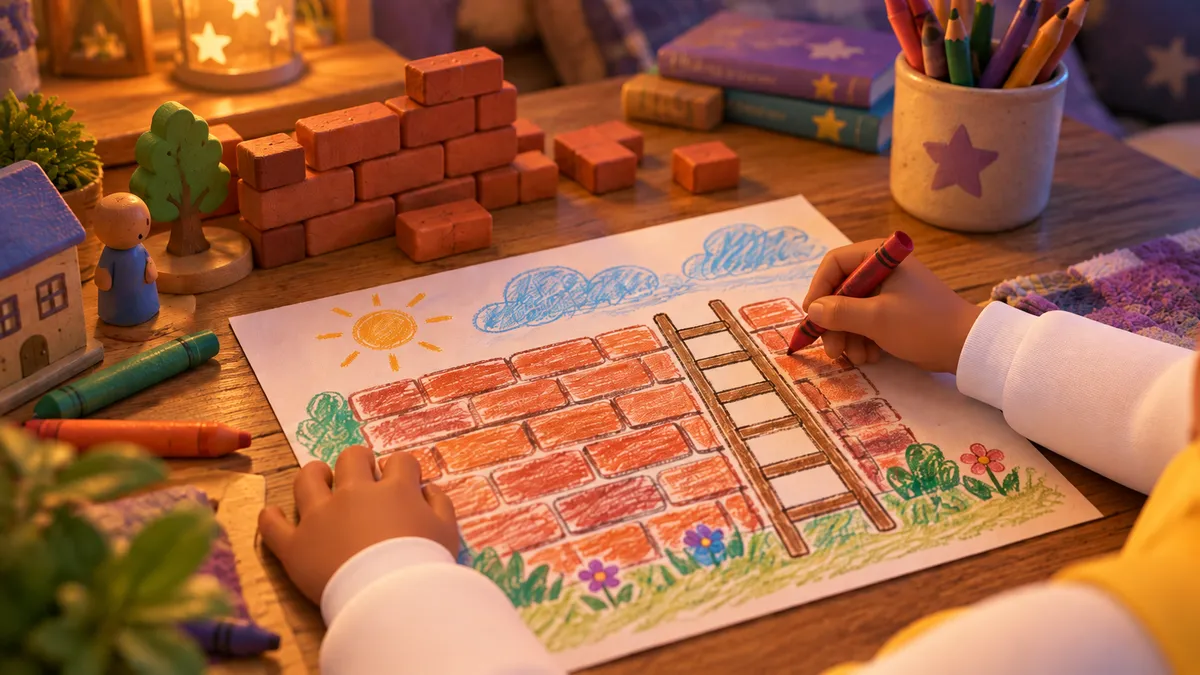
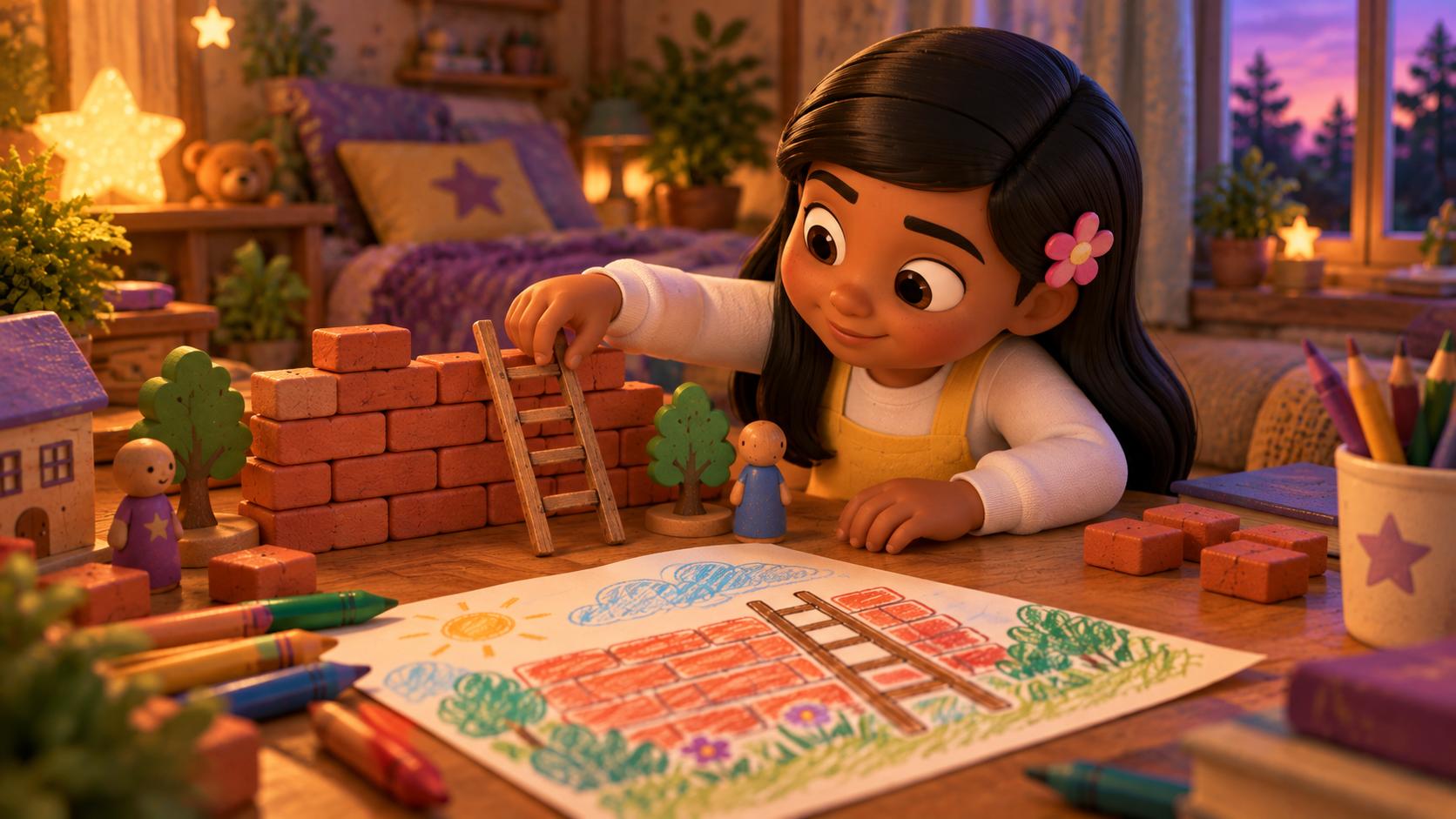
In the story there was a brick wall. It stood directly in the way. And what I remember most is that we didn’t immediately start trying to remove it. We noticed it. We became curious about it.
What was the wall? What was it like to stand in front of it? What might be on the other side? Was there another way through? And slowly, through imagination, something else appeared. A ladder. There was even the discovery that asking somebody else for support was allowed. The ladder mattered. But I think something equally important happened before the ladder appeared.
There was time to become curious about the wall.
We are very good at looking for ladders

It makes sense. When our child has a problem, we want to help them solve it. They don’t want to go to the party?
We start thinking about how we can help them through the door. Something is difficult at school?
We begin searching for what might make tomorrow easier. They are having trouble with a friend?
Our minds fill with things they might say or do. We see the wall and begin building the ladder. That is care in action. But sometimes, if we move towards a solution too quickly, we miss the chance to understand what the wall actually is.
Curiosity creates a little space

There is a difference between:
“What are we going to do about this?”
and:
“I wonder what is making this feel so difficult?”
The first question moves us towards action. The second gives us somewhere to stay for a moment. There is room for uncertainty. Room for something unexpected. Room to discover that the thing we assumed was difficult may not actually be the difficult bit at all. Curiosity does not mean we never reach the solution.
It simply means we don’t always have to begin there.
Children don’t always need to talk directly about themselves.
This is one of the reasons I have always valued imagination in my work with children. Talking directly about a difficult feeling can be enormous. But talking about a wall? A character? A creature who finds something frightening? A picture?
Suddenly, the feeling does not have to be held entirely inside the child. There is something outside themselves that we can both wonder about. A child can decide how close to come. They can experiment. Change the story. Draw another ending. Build a ladder. Ask a character what they need.
And sometimes, along the way, we glimpse something about the child’s experience without ever having required them to explain it.
Play is not the bit before the real work
I think we can sometimes underestimate what is happening when a child draws, plays or makes up a story. We might be tempted to see it as the thing happening before we get to the real conversation.
But sometimes it is the conversation.
Stories and imagination can give children ways to explore things that are harder to approach head on. That doesn’t mean we need to decode every picture or decide what each character “really means”. That would take us straight back to searching for answers. Instead, perhaps we can wonder alongside them.
“I wonder what that character thinks about the wall?”
“What do you think might help?”
“Does anybody else know about the wall?”
And then let the child show us where the story wants to go.
Finding the ladder
Eventually, we may need ideas. The child who imagined the brick wall found a ladder. Another child may discover a door. Another might decide they need somebody on the other side. Another may not be ready to do anything with the wall at all.
The point isn’t the ladder.
The important part is that possibility had room to emerge. When we resist supplying the answer immediately, sometimes a child has the opportunity to discover possibilities of their own. And when they need our help, we are still there. Curiosity and support are not opposites.
We can wonder together.
Something you could try

The next time your child brings you a problem, notice how quickly your mind begins looking for the ladder. There is nothing wrong with that. It comes from wanting to help. Just notice it. And perhaps, before offering the ladder, try one wondering:
“I wonder which bit of this feels hardest?”
Or:
“I wonder what you have already noticed about it?”
Your child may not answer. That is okay too. Curiosity does not require an immediate response.
Sometimes simply making room for the question changes what becomes possible.
Somewhere curiosity can lead the way
Many of the resources inside The Worry Wizard Community begin from exactly this place. Not:
How do we make a child tell us what they are feeling? But:
How might we create another way in?
The Curiosity Wheel can introduce a subject without requiring a child to name their feelings. Belonging Bingo helps you discover more about the people, places and experiences that matter to them. Animations and creative activities give you something outside yourselves to wonder about together.
Sometimes a comment made while drawing, an unexpected answer or something a child notices about a character gives us a glimpse of what has been occupying their thoughts.
And sometimes your child doesn’t want to use the resources at all.
That is fine too.
There is plenty inside the Community that you can explore as a grownup, so you can begin thinking differently about worry without needing your child to take part.
If you would like some company getting curious about the wall before rushing to find the ladder, you are very welcome inside The Worry Wizard Community.
Join here: https://www.theworrywizard.com/
Before you go...
Perhaps think of something your child is finding difficult at the moment. Instead of immediately asking:
How do we solve this?
Perhaps wonder:
What haven’t we wondered about yet?

Frequently Asked Questions
How can I help my child work through a problem without taking over?
You might begin by becoming curious about how your child sees the problem before offering your own ideas. I wonder what they have already noticed. Which part feels hardest? Is there something they have already tried? They may still need your help, but giving their experience a little room first can help you understand what support might actually be useful.
Why might my child find it hard to talk about their feelings?
Children do not always understand what they are experiencing, or have the words to explain it. And sometimes a direct conversation about feelings simply feels too big. Stories, drawing, play and activities can give you something outside your child to wonder about together, without requiring them to begin with, “This is how I feel.”
Can play help my child explore their worries?
Play and imagination can offer children another way to explore something difficult. The aim is not to interpret everything your child creates or to search for a hidden meaning. You can stay curious alongside them and let your child decide where the story goes.
What might I ask when my child is worried?
You do not need a long list of questions. Sometimes one gentle wondering is enough: “I wonder which bit feels hardest?” or: “I wonder what might help a tiny bit?” And if your child does not answer, you do not have to keep asking. The invitation can stay open. Inside The Worry Wizard Community, we practise this kind of curiosity together. Not because curiosity gives us every answer, but because sometimes it helps us discover a question we had not thought to ask.
If today's reflection has stirred something in you, you are very welcome inside The Worry Wizard Community.
Join here: https://www.theworrywizard.com/
It would be lovely to welcome you there, Amy✨
