World Mental Health Day 2026: Being Heard | The Worry Wizard
Every year, World Mental Health Day asks us to talk a little more openly about something that deserves far more than one day.
This year's theme is about something I think matters enormously: lived experience. Not just being spoken about, but being genuinely heard, and having that experience shape how support actually works.
I want to explore that idea today, because I recently sat down with Kathryn Lovewell and Liz Walker for their podcast, Raising Kind Minds, and something happened in that conversation that I have thought about many times since.
An exhale
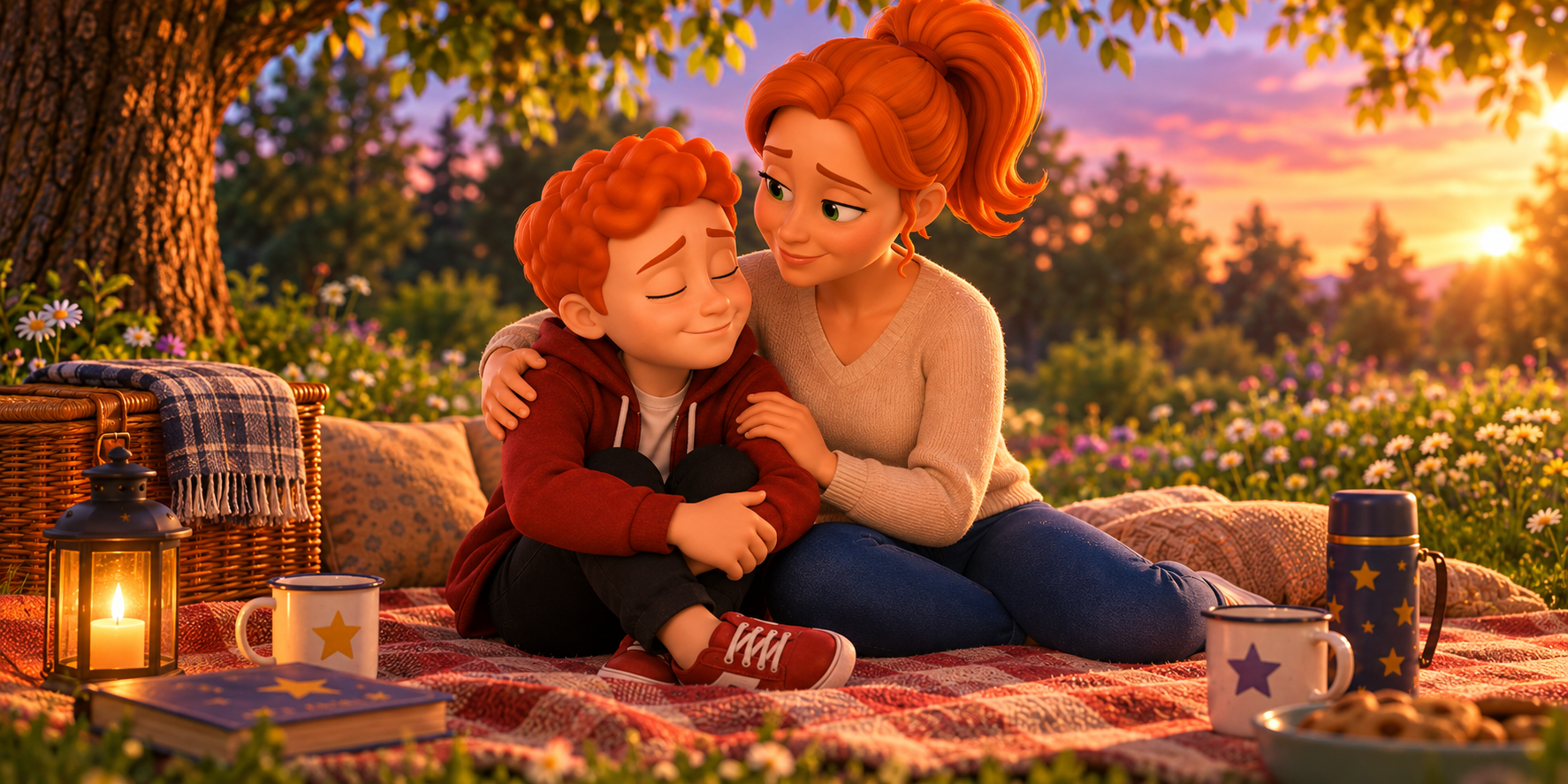
After more than twenty years of sitting with children in counselling rooms, there is a moment I have come to recognise almost every time. It happens at the end of nearly every first session.
A child exhales.
Not always visibly. But you can feel it. They have found someone they trust with something they may have been carrying quietly for a very long time.
This moment is particularly important as many children never reach a counselling room.
So this question follows me throughout my working life:
How do we create more of those exhale moments in everyday life?
At bedtime. In the car. During play. Through stories. In ordinary conversations. That question is really the whole reason The Worry Wizard exists.
Something that may seem surprising considering the work I do.
When Kathryn and Liz introduced me on the podcast, they were warm and generous, everything they said was rooted in fact rather than flattery. Yet still, something in me wanted to shrink. I found myself saying, almost before I'd decided to:
"Reduce. Shut this down. Stop this."
That was the noise inside me, even after decades of doing this work, even with all the training behind me.
It is important to share this because it is easy to assume some people have all the answers.
I don't have all the answers. Receiving kindness is still difficult for me too.
And that led me to a question I keep coming back to:
If I struggle to receive kind words, how difficult must it be for our children?
We hope they'll hear the kind things we say to them. We hope they'll absorb them. We hope they'll believe them. And often, they struggle. Just as we do.
That feels like an important thing to sit with this World Mental Health Day. Because being heard isn't only about someone else speaking. It's about whether we can let what they say land somewhere inside us.
The junkyard artist
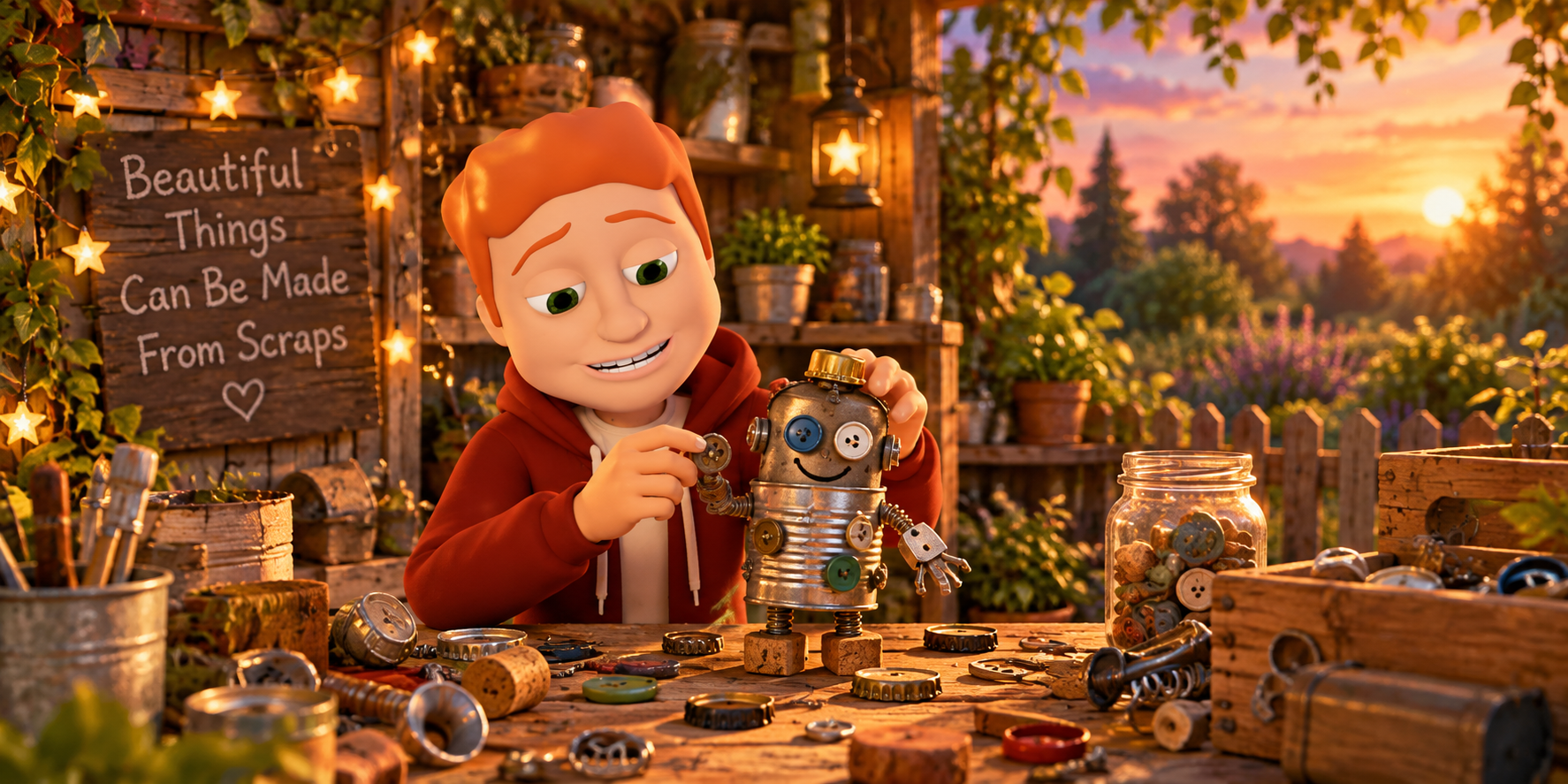
There's a phrase I've been carrying since I first came across it. The writer Ocean Vuong once described himself as a junkyard artist with language, someone who works not with polished, perfect material, but with scraps. Fragments. The overlooked pieces other people might just walk past. I think about that a lot in relation to children who are struggling.
So often, when our child is finding something difficult, we find ourselves standing at an imagined finish line. The day school feels easier. The day friendships feel easier. The day the worry finally goes quiet.
There's nothing wrong with hoping for that. Of course we do. We love them. But while we're looking towards that finish line, something else can happen almost without us noticing.
We stop noticing the scraps.
The five minutes in the classroom when yesterday they couldn't go in at all. The conversation that lasted thirty seconds longer than usual. The laugh after a difficult day. A hand reaching for yours. A tiny flicker of courage.
What if those are exactly the pieces the junkyard artist would choose?
Progress is so often hidden inside the moments we almost miss.
You are not failing because someone else's solution didn't fit.
I think parenting a struggling child can feel remarkably lonely. Not because people don't care, but very often because they do.
"Have you tried..."
"What helped us was..."
"You should..."
Advice like this almost always comes from kindness. People want to help. They want to offer hope. But even the most well-meaning suggestion can leave a parent feeling not good enough, not knowledgeable enough, or quietly misunderstood, especially when you already know, in your bones, that it isn't right for your child. I want to say this clearly, because I think it matters:
You are not failing because someone else's solution didn't fit your child.
Your child is not everybody else's child. Your family is not everybody else's family.
And knowing that something isn't right for your child isn't a sign you're getting it wrong. Sometimes it's a sign you know them well.
Who are your people?
There's an idea from Maya Angelou I find myself returning to often.
Alone can feel impossible. Together can feel possible.
When we think about support, we usually think of people who are physically present. The people we can call. The people we can see.
But Angelou spoke about something wider than that, about holding people in mind. Calling them forward. “Come with me. I need you now.”
Because some of you reading this might be thinking, I don't really have anyone. Not close enough. Not available at two in the morning when the worry arrives.
And yet, I wonder whether there are still people we carry with us. A grandparent whose voice is still vivid years later. A teacher who saw something in us. A friend we no longer see, whose belief in us somehow became part of who we are.
Sometimes strength doesn't come from finding all the answers. Sometimes it comes from remembering we don't have to carry everything alone.
So today, perhaps it's worth wondering:
Who are your people? Who would you invite to walk beside you in the part of the journey you're in right now?
Somewhere to be heard
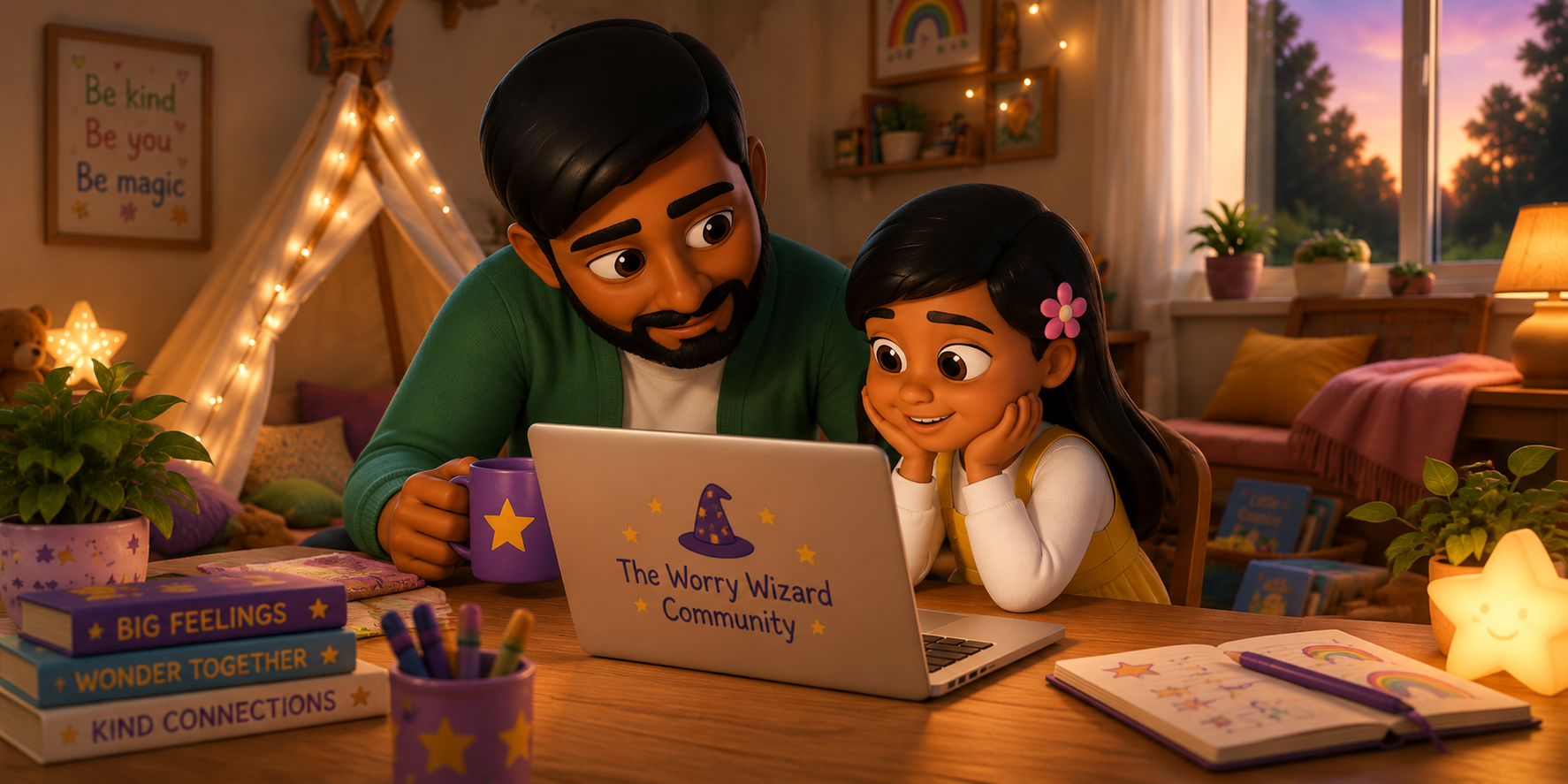
That question is really what The Worry Wizard Community has always been for.
Not another place with all the answers. Somewhere to put the questions instead.
Inside, there are practical, therapy-informed resources and ideas, but perhaps more importantly, there is connection, the reassurance that you are not the only person finding this difficult.
If today has stirred something for you, you are very welcome inside The Worry Wizard Community.
But what I hope you'll find most is the feeling that you're not carrying this on your own anymore.
Listen to the full conversation
This World Mental Health Day, I'd love you to listen to the conversation I had with Kathryn Lovewell and Liz Walker on their podcast, Raising Kind Minds.
We talked about the exhale moment. The junkyard artist. Receiving kindness. And why the grownups around a child matter every bit as much as the child themselves.
🎧 Listen to the full episode here
Before you go...
Perhaps today isn't about finding the perfect thing to say to the child in your life.
Perhaps it's simply this:
How do you feel when somebody shares kind words about you? And how might your child feel, when it's their turn to try and let kindness in?
Frequently Asked Questions
What is the theme of World Mental Health Day 2026?
This year's global theme, set by the World Federation for Mental Health, is “Lived Experiences Heard: Real Voices, Real Change,” focusing on ensuring that people's own experiences genuinely shape the support and services built around them.
How can I talk to my child about mental health on World Mental Health Day?
You don't need a perfect script or a formal conversation. Small, everyday moments, at bedtime, in the car, during play, can become just as powerful as a planned discussion. Staying curious and available often matters more than finding exactly the right words.
Why is it hard for children (and adults) to accept kind words or compliments?
Receiving kindness can feel surprisingly difficult, even for adults with decades of experience. It's a very human response, not a sign that something is wrong with you or your child. Simply noticing this together, rather than expecting kind words to be easily absorbed, can be a helpful first step.
What can I do if I feel alone in supporting my child's mental health?
You are not alone, even if it feels that way. The Worry Wizard Community exists for exactly this reason: to offer connection, practical resources and the reassurance that other grownups are navigating similar things. Sometimes the people who have shaped and encouraged us can also be carried with us, even if they are not physically present.
If today's reflection has stirred something in you, you are very welcome inside The Worry Wizard Community.
Join here: https://www.theworrywizard.com/
It would be lovely to welcome you there, Amy✨
